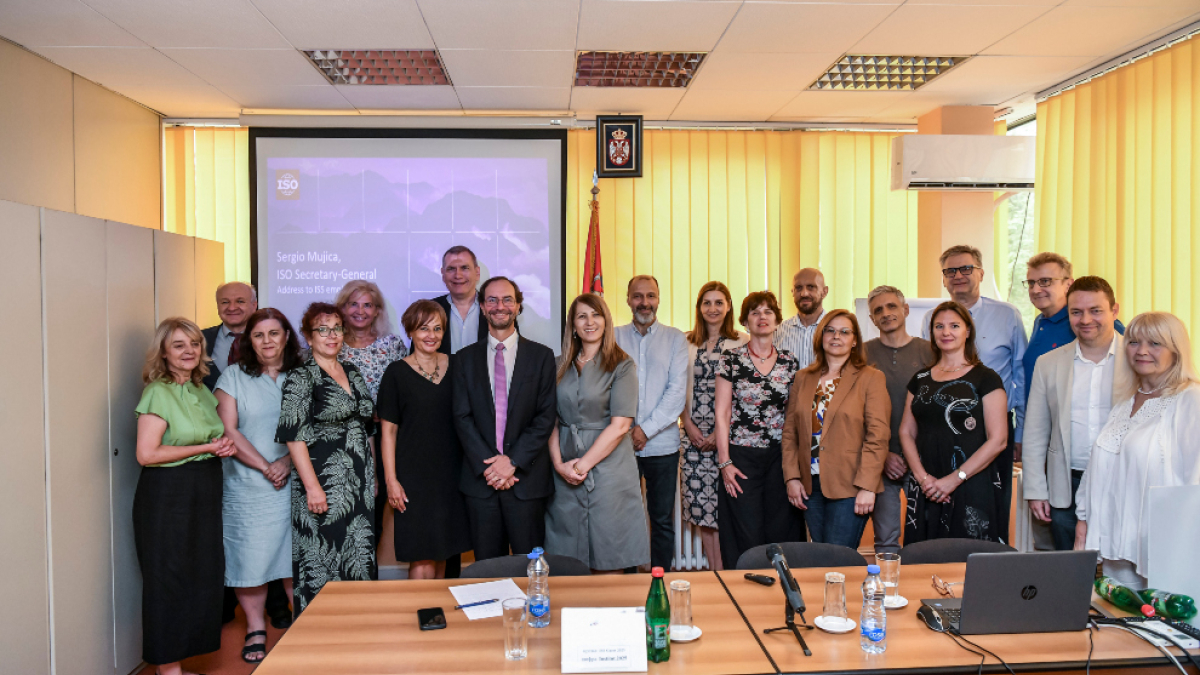
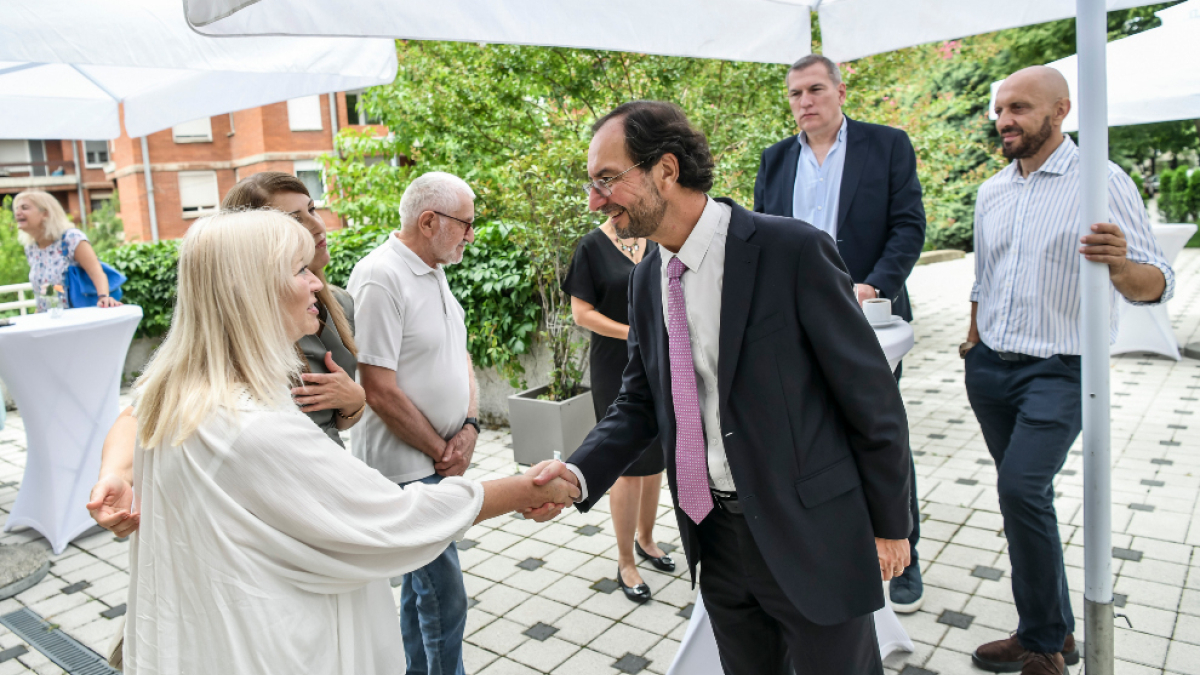
The Institute for Standardization of Serbia (ISS) had the honour of hosting the Secretary-General of the International Organization for Standardization (ISO), Mr Sergio Mujica, in Belgrade on 13 July 2026. The visit was a significant event for ISS, reaffirming the long-standing successful cooperation and partnership between the Institute and ISO, as well as ISS’s important role in the international standardization system and in the work of the ISO Council.
Meeting with the ISS Management
The visit began with a welcome address by the Acting Director of the Institute for Standardization of Serbia, Ms Tatjana Bojanić, who welcomed the ISO Secretary-General and emphasized that his visit was a great honour for the Institute. During a presentation on the work of ISS, Ms Bojanić highlighted that, in addition to its membership in international standardization organizations, the Institute is also a full member of the European standardization organizations CEN and CENELEC. She particularly emphasized the importance of cooperation with national standards bodies in the region in creating opportunities for easier participation in joint projects, noting that ISO support in this regard would be highly valuable.
During the meeting, the ISO Secretary-General had the opportunity to learn more about the internal organization and status of ISS, as well as matters related to the Institute’s operations and its methods of communication with stakeholders. In the continuation of the meeting, Mr Mujica presented current trends in standards development, with particular emphasis on online standards development platforms (OSD), SMART Standards, which enable machine-readable and machine-actionable content, as well as new digital tools and possibilities for their future application at the national level.
Particular attention during the meeting was devoted to the status of the Serbian language in international standards. ISS representatives informed the ISO Secretary-General about the activities undertaken by the Institute to address this issue since 1998. Although the issue of the so-called language standards has since been resolved, ten standards developed by the ISO/IEC Joint Technical Committee ISO/IEC JTC 1, Subcommittee 2 on Coded Character Sets (ISO/IEC JTC 1/SC 2), still use the term “Serbo-Croatian” instead of “Serbian”. In addition, the Serbian language is still not officially recognized as a language in which both the Cyrillic and Latin scripts are used on an equal basis. In this regard, ISS representatives appealed to the ISO Secretary-General for his support and contribution to the final resolution of this long-standing issue.
Address to ISS Employees
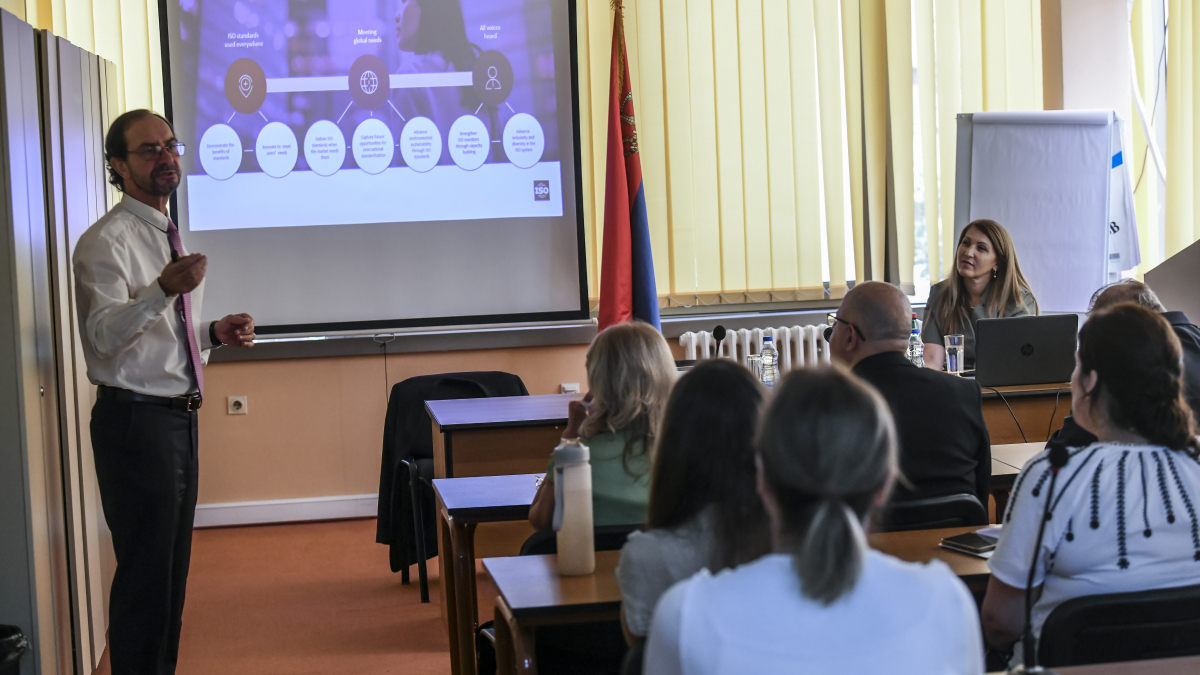
As part of his visit, Mr Sergio Mujica also addressed ISS employees, providing them with an opportunity to gain first-hand insight into the priorities and development directions of international standardization. During an informative and interactive presentation, the ISO Secretary-General outlined the history and structure of the organization, its strategic objectives and current activities, while also addressing changing market needs and stakeholder expectations. He spoke in particular about the challenges facing standardization amid rapid technological development and the importance of digital transformation for its future development.
An open and direct discussion with ISS employees focused on the forthcoming transition to new standards development platforms and the importance of timely preparation of national experts for this change. Particular attention was devoted to the digital transformation of standardization processes and the increasingly widespread use of SMART Standards, which open up new possibilities for accessing, using and applying standardized information. Experiences were also exchanged regarding the use of new IT tools developed by ISO, including the ISO Companion application, which was presented as a tool designed to facilitate access to information on standards and their practical application.
This part of the visit was particularly significant for ISS employees, as it provided an opportunity for direct exchange of views with the ISO Secretary-General on the changes facing national standards bodies and their role in the further development of the global standardization system.
Dialogue with Committee Members and Stakeholders
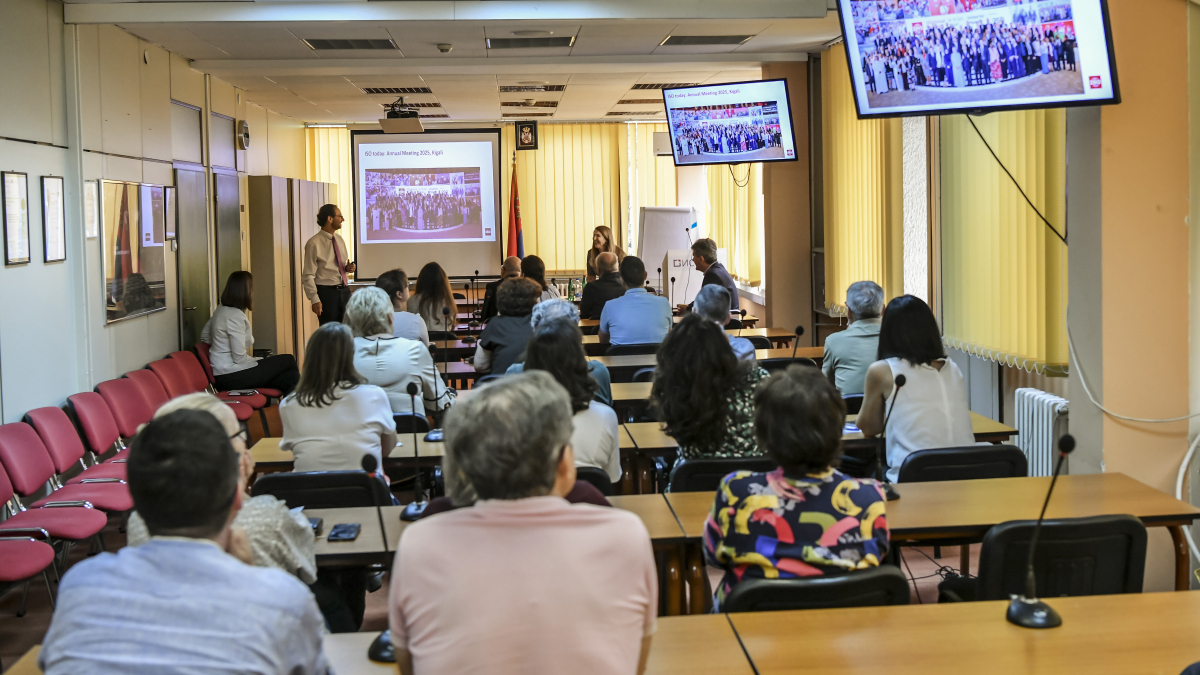
The third part of the visit included a meeting with representatives of national standards committees and other stakeholders, providing an opportunity for an open exchange of views on current issues and the future development of standardization. Mr Sergio Mujica presented the ISO Strategy 2030, outlining its key objectives, strategic directions and development priorities, with particular emphasis on the need for international standardization to respond to increasingly rapid technological, economic and societal changes.
Participants discussed opportunities for greater involvement of Serbian experts in the work of ISO international technical committees, taking into account the importance of their direct participation in the development of international standards. Particular attention was also devoted to the practical application of digital tools aimed at contributing to more efficient work by experts, improving the standards development process, and facilitating communication and cooperation among participants at different stages of standards development.
The meeting reaffirmed the importance of further strengthening cooperation between ISS and ISO and of more active participation by the Republic of Serbia in the development and adoption of international standards. In this context, the need for continuous education and professional development of members of national committees was recognized, as was the gradual introduction of new working methodologies and digital solutions that reflect contemporary trends in international standardization.
The exchange of views during the meeting confirmed the commitment to continuing dialogue and cooperation, with the aim of creating conditions for an even greater contribution by Serbian experts to international standardization and further strengthening the position of ISS within the global standardization system.
Prepared by: Jovana Korićanac